Apple's 25 Year Legacy Begins With 1,000 Songs in a Pocket Sized Player
The original iPod marked a major shift in consumer technology by storing a full music library on a device no larger than a standard deck of playing cards.
By Nadia Almasi ·
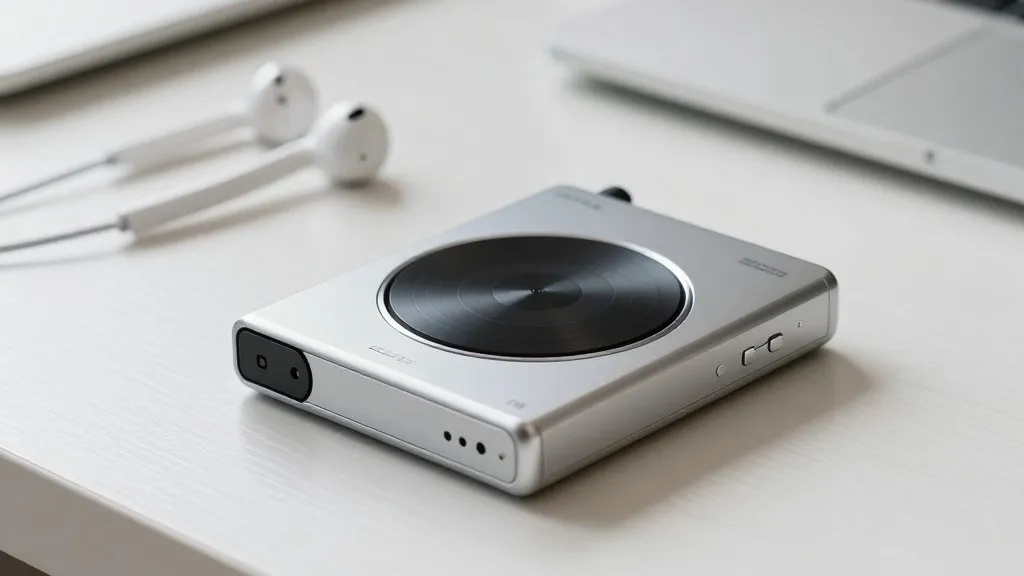
The figure of 1,000 songs remains the most enduring metric of the original Apple iPod, a device that transformed personal music consumption two decades ago. On October 23, 2001, Apple CEO Steve Jobs unveiled the product to the public. He initially teased the audience with the promise of a breakthrough digital device that was not a Mac. The reveal quickly became a landmark moment in technology history, establishing a new standard for portable entertainment before smartphones eventually rendered dedicated music players obsolete.
The device carried a price tag of $399 at its launch. This cost was justified by the promise that users could carry their entire music library in their pocket. The hardware utilized a 5 gigabyte hard drive, a significant capacity for the time. This storage allowed the device to hold 1,000 typical pop songs encoded as MP3 files at 160 kilobits per second. Jobs emphasized that for the average consumer, this capacity represented their complete collection of recorded music.
The timing of the launch was critical for the Cupertino based company. At that moment, Apple had successfully navigated its transition into the Mac OS X era, with established lines of iBooks and iMacs driving a revival in corporate fortunes. This growth occurred during a challenging economic period following the burst of the dot-com bubble. Jobs envisioned the Mac as the central hub of a user's digital lifestyle, connecting devices such as digital cameras, camcorders, and DVD players. He identified portable music as a massive market target that lacked a dominant leader, making it an ideal area for Apple to expand.
Jobs acknowledged the presence of competitors in the portable digital music space. He noted that companies like Creative, Sonic Blue, and the larger Sony already offered similar products. However, he argued that none of these rivals had yet discovered the correct formula for digital music. At the time of the announcement, the market featured four main categories of players: CD players, MP3 CD players, flash players, and hard disk based jukebox players. Apple chose the hard disk approach as the optimal entry point for its new product line.
The physical design of the player was a key differentiator. The device measured 2.4 by 4 by 0.78 inches and weighed just 6.5 ounces. Jobs described the form factor as being the size of a deck of cards, making it lighter than most cell phones of that era. This compactness was made possible by a 1.8 inch hard drive from Toshiba that was only 0.2 inches thick. The design aimed to be both minimal and durable, reflecting what Jobs called an amazing Apple design aesthetic.
Performance features were also highlighted during the presentation. The player supported CD quality sound and compatible audio formats including MP3, WAV, and AIFF. It included 20 minutes of skip protection to prevent audio dropouts during movement. The device charged and transferred data via a single FireWire 400 cable. Jobs claimed this connection allowed a full CD of music to transfer in five to 10 seconds, a significant speed advantage over USB connections of the time, which could take up to five minutes for the same task. Transferring the full 1,000 song library was estimated to take only 10 minutes, compared to five hours on a USB device.
Power management was another area of focus. The original unit featured a rechargeable lithium-polymer battery that provided 10 hours of continuous playback. Apple stated that an empty battery could be recharged to 80 percent capacity in just one hour. The interface was designed for ease of use, featuring controls that were friendly to single hand operation. An accelerated scroll wheel with a piezoelectric clicker provided tactile feedback, allowing users to quickly locate music by playlist, artist, or song title.
The integration with software was the final pillar of the product strategy. The device launched alongside iTunes 2, which introduced features such as MP3 CD burning. The Auto-Sync feature ensured that music libraries curated on a Mac would always remain synchronized with the player whenever it was connected. This seamless connection meant the iPod could also function as a FireWire hard drive. During the launch event, the first song played on stage was 'Building a Mystery' by Sarah MacLachlan.
The impact of this device lasted for nearly two decades. The first iPhone did not arrive until early 2007, more than five years after the original iPod debut. The two product lines coexisted for over a decade, though the iPod's prominence gradually diminished as smartphones matured. The final model, the 7th generation iPod Touch, was released in May 2019. Although the line was left without updates for several years, Apple officially discontinued the product line in May 2022, closing the chapter on a device that defined a generation of music listening.
Source: Tom's Hardware · original report published