9,000 hectares: Satellite data reveals hidden poppy boom in Pakistan
Satellite data reveals a major shift in opium production to Afghan border regions following the Taliban's 2022 narcotics ban.
By Chioma Kim ·
Afghanistan has been the world's largest opium producer for years, but output has dropped sharply since the Taliban banned illicit narcotics in 2022. Cultivation has not stopped, however. It is moving across the border into Pakistan and Iran. Satellite imagery and farmer interviews show a steep increase in poppy fields in regions bordering Afghanistan.
David Mansfield, a UK-based expert on Afghanistan's drug industry, said the ban and local instability created conditions for widespread growth. He described the tri-border area as a global center for opium production. Mansfield is the author of A State Built On Sand: How Opium Undermined Afghanistan. He warned that cultivation could rise further in 2027, boosting heroin supplies and funding armed groups.
Pakistan's Balochistan province is at the center of this shift. The region is the country's largest and poorest, with a long history of insurgency. Islamabad denies significant cultivation, saying any crops found are destroyed. The Interior Ministry and provincial government did not respond to comment requests. The United Nations Office on Drugs and Crime called Pakistan's production marginal but acknowledged data suggests spillover effects.
Alcis, a British satellite firm, identified more than 9,000 hectares of poppy cultivation in Balochistan. Most of the fields are in Loralai and Killa Abdullah districts. Abdul Qahar Wadan, a former National Assembly member from Killa Abdullah, said cultivation is rampant. He alleged senior military officials and power brokers take commissions. Monawar Hussain, the district's chief administrative officer, rejected that claim, saying cultivation declined after an eradication campaign last year. Alcis imagery from 2026 shows no clear evidence of that eradication.
A farmer in Killa Abdullah, speaking anonymously, said growers pay bribes through intermediaries. He said they sometimes plant poppies on barren land when media pressure rises, allowing officials to destroy the crop for public display. Lala Jan Kakar, a resident, said drought and floods have hurt fruit farming. He noted the demand and income for poppies are much higher.
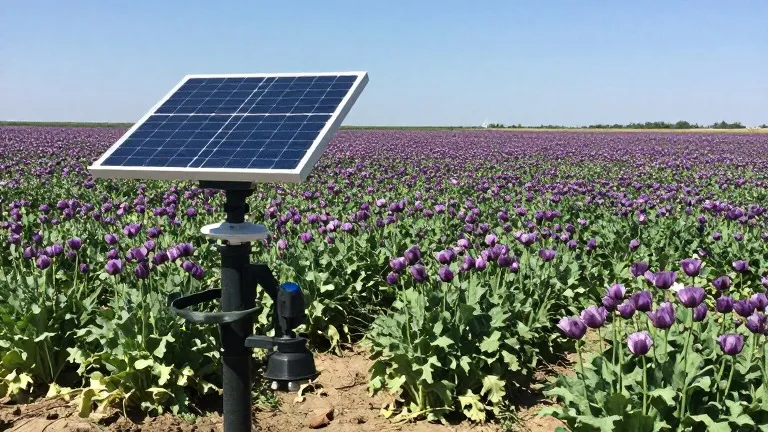
Afghan farmers from Kandahar and Helmand are leasing land in Pakistan, bringing money and expertise. Kakar said they invest millions of Pakistani rupees in solar-powered wells and share profits. Poppies can be harvested twice a year. Many farmers doubled their cultivated land in 2026. Mansfield called this a stark indication of higher cultivation expected in 2027.
A similar pattern is emerging in Iran's Sistan-Baluchistan province. Afghan farmers work as tenants and sharecroppers there. Satellite imagery shows extensive fields, some using drip irrigation. This costly investment suggests growers expected little risk of eradication. Iranian authorities, focused on the war against the United States and Israel since late February, have not destroyed the 2026 crop. Experts expect cultivation to rise as the economy weakens.
Inside Afghanistan, production is rebounding despite the ban. Badakhshan Province in the northeast accounts for about half of national output. Southwest provinces also see growth. Mansfield said southwestern cultivation almost doubled between 2025 and 2026. Farmers often hide crops in wheat fields or behind walls. A recent directive barring home searches without a court order may signal tolerance, potentially leading to a dramatic rise in production in 2027.
Source: RFE/RL