Water Costs in Taiz Rise 75% as Siege Limits Supply
Residents of Yemen's third-largest city now stretch 10 liters of water over four days amid Houthi advances.
By Chioma Kim ·
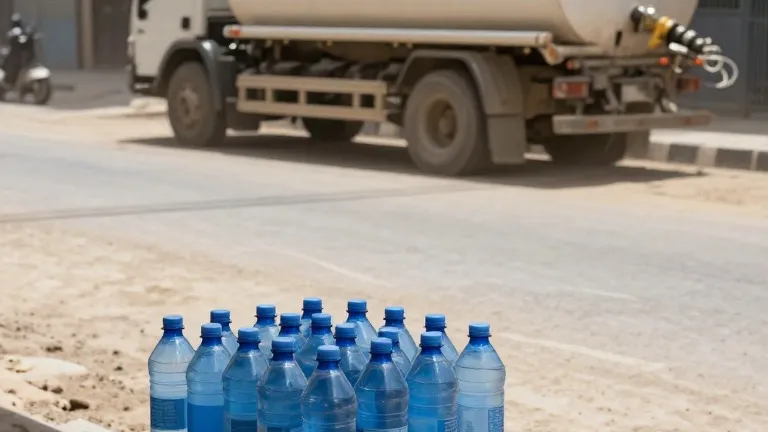
Yemen’s civil war has entered its twelfth year, but humanitarian aid groups report that conditions in Taiz have deteriorated sharply in recent weeks.
The Iran-backed Houthi rebels have tightened a siege around the country’s third-largest city, causing water prices to climb as much as 75 percent compared to a few weeks prior. Families are now stretching 10 liters, or 2.6 gallons, of bottled water to last approximately four days. Hadil al-Shahid, a resident, stated that her household stopped drinking daily coffee and tea to conserve supply. She added that some neighbors are now purchasing water on credit.
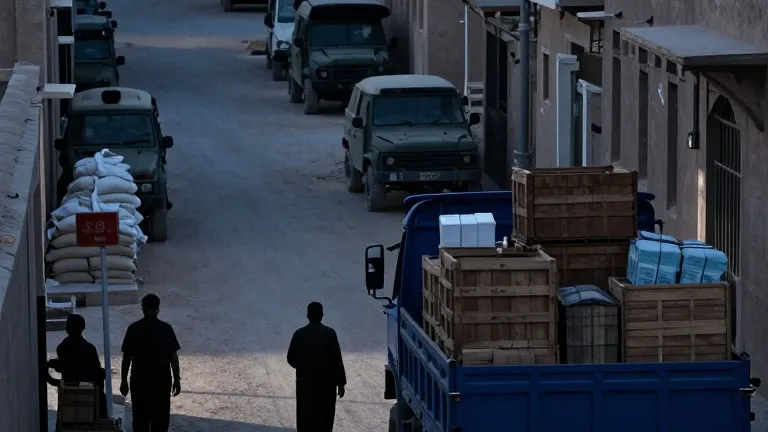
Logistical bottlenecks have severely restricted access to essential resources. Water trucks are largely blocked from entering the city, while local wells face restricted access and desalination plants operate below capacity due to fuel shortages. Truckers who still attempt the dangerous route into Taiz have tripled their rates in some cases. These disruptions have extended to other necessities, with cooking gas prices more than quadrupling and flour and rice costs rising by about 50 percent since the summer.
The strain on the local economy is visible in daily life. Al-Shahid, who owns a hair salon, closed her business as customers prioritized spending on food and water. Her children now eat primarily rice, bread, and cheese. Ahmed Abdel Gaber, a displaced man living in a ruined building with nine relatives, said his income from hauling construction materials has become unstable. He noted that his family relies heavily on donations for food.
Taiz province has absorbed an estimated 124,000 displaced people since August, according to United Nations migration experts. These newcomers, many living in makeshift shelters, have increased demand for scarce resources. Jens Laerke, a UN spokesperson, warned that the shortages create a cycle that increases the risk of disease, including cholera, as families turn to unprotected wells. Amnesty International urged the Houthis to open roads into the city immediately to prevent a severe humanitarian disaster.
The military context remains fluid. The Houthis captured the port city of Mokha last month and control about 80 percent of the surrounding countryside, according to three anonymous Houthi officials. Foreign Minister Afrah al-Zouba acknowledged the rebels' tightening grip on the region. Fighting continues in the hills east of the city, where government forces face stiff resistance.
The conflict has brought immediate danger to civilians. Earlier this week, Houthi missiles struck a residential area, killing two teenage girls. Abdel Gaber reported hearing daily explosions from combat approximately 5 kilometers away. Al-Shahid said her family cannot afford to leave the city, describing staying in their home as inevitable regardless of the risks.
Source: NPR