Discovery Launched Harmony Module to Orbiting Lab in 2007
The utility hub, built by Italy-based Thales Alenia Space, provides connection points for Europe's Columbus laboratory and Japan's Kibo laboratory.
By Christopher Richardson ·
The space shuttle Discovery lifted off on October 23, 2007, carrying the Harmony module toward the International Space Station.
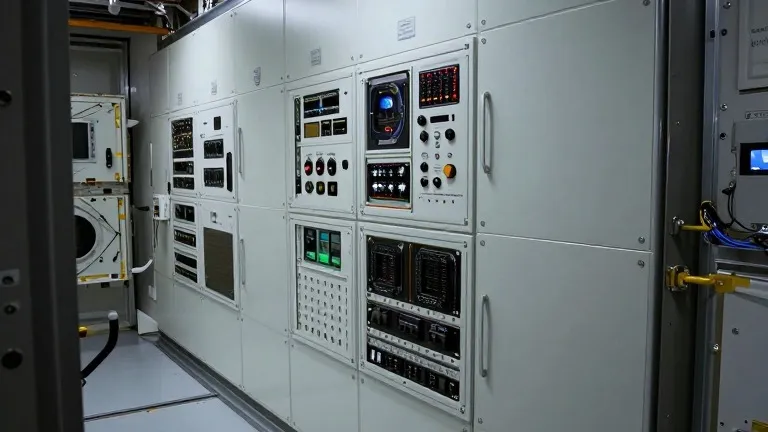
The STS-120 mission delivered a utility hub measuring 14 feet wide and 24 feet long. Harmony connects with the European Space Agency's Columbus module and Japan's Kibo laboratory, and it houses the crew quarters for American astronauts. Thales Alenia Space, based in Italy, built the module for NASA, which originally designated it Node 2. The name Harmony was selected through a public naming contest run by NASA.
The module's arrival changed the station's size. With Harmony installed, the orbiting complex went from about the size of a three-bedroom house to something closer to a five-bedroom house. The mission opened a new phase of station growth by providing a connecting hub for future modules. Before Harmony, the most recent new room added to the station had arrived in 2001, when Russia's Pirs docking module was attached.
Astronauts first attached Harmony temporarily to the Unity node. After Discovery departed, the crew used the station's robotic arm to move the shuttle docking port out of the way at the Destiny module, clearing space for Harmony to be berthed beside Destiny. Following the roughly two-week STS-120 flight, Harmony was relocated from Unity to the forward port of NASA's Destiny laboratory, where it became the link for Europe's Columbus lab on the starboard side and Japan's Kibo lab on the port side.
Harmony carries five common berthing mechanisms that serve as connection points for other station modules. Inside, the module holds eight payload racks, four devoted to avionics and four used for stowage or crew quarters. NASA's astronaut sleeping quarters are based in the module. Harmony was the second NASA-led hub module for the station, following Unity, also known as Node 1.
Source: Space.com