Electron Rocket Places Three Hawk Satellites in Orbit
Rocket Lab's 19th launch of 2026 deployed three signal-sensing spacecraft for HawkEye 360 to a 520-kilometer altitude.
By Chioma Kim ·
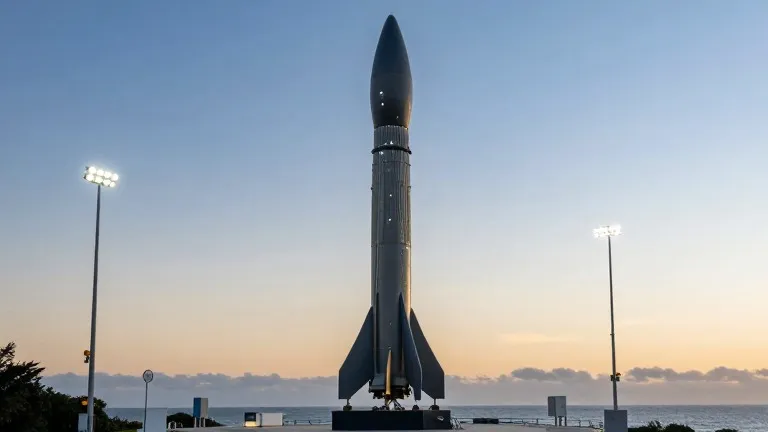
Three new satellites are scanning the Earth from 323 miles above the surface. Rocket Lab deployed the spacecraft into low Earth orbit early Thursday morning, adding to a growing constellation of commercial signal sensors.
The Electron rocket lifted off from New Zealand at 3:11 a.m. EDT. The mission, designated "We're Not Hawking Around," carried three "Hawk" satellites built for HawkEye 360. The company is based in Virginia. The satellites will operate in a cluster to collect data across the radio frequency spectrum.
HawkEye 360 provides this information to the U.S. government and allied nations. The firm states that its goal is to enable faster decision-making through space-based collection and AI-powered analytics. The data supports maritime tracking, radar monitoring, and communications mapping.
This launch marks the 98th flight for Rocket Lab overall. It is the company's 19th launch of 2026. Sixteen of this year's flights used the standard two-stage Electron rocket. Three others used HASTE, a suborbital variant designed for hypersonic testing. The Electron stands 59 feet tall.
The deployment follows a similar mission just two days prior. Three other HawkEye satellites flew on SpaceX's Bandwagon-5 rideshare mission. HawkEye 360 has placed nearly 50 satellites in orbit since its first launch in 2018. The new spacecraft will begin scanning for radio frequency emissions once commissioned.
The launch site in New Zealand hosted the mission at 8:11 p.m. local time. The spacecraft reached the target altitude of 520 kilometers. This expansion continues the rapid growth of the private satellite fleet dedicated to radio frequency monitoring.
Source: Space.com