Macron Deploys 70,000 Officers as French Student Protests Face Heaviest Police Response in Decades
With 9,000 detainees and schools facing critical infrastructure failures, the government prioritizes order over education reform.
By Nadia Almasi ·
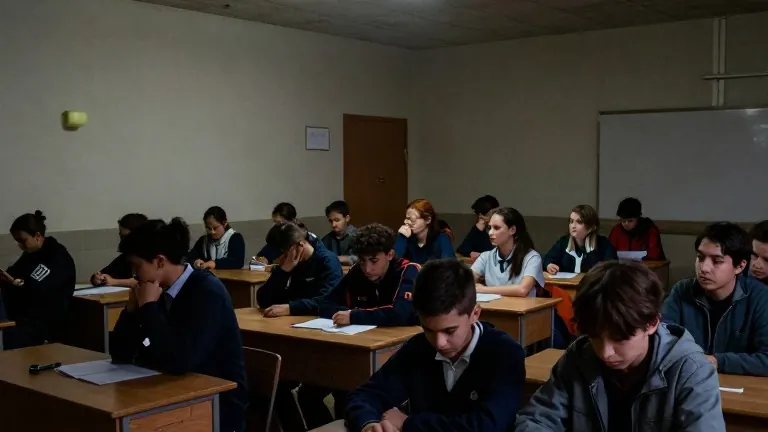
French President Emmanuel Macron has ordered the deployment of 70,000 police officers to manage the ongoing student protests, a move that signals a shift toward a heavily militarized response. The deployment follows a week of intense unrest that has drawn global attention to the deteriorating state of France’s public infrastructure.
The government’s strategy centers on a narrative of public order. Prime Minister Sebastien Lecornu framed the conflict as a binary choice for citizens: support the police and the Republic, or align with the rioters and their violent agenda. Macron, in a public address, stated that he understood the students but emphasized his support for the law enforcement officers on the ground. He has also pledged to introduce a ban on protests, while accusing the far left of attempting to bring down the republic.
The scale of state intervention has been substantial. By October 14, authorities had placed 7,950 individuals in police custody since the protests began in September. Of those, 85 percent were minors. An additional 2,700 people were detained following the demonstrations on October 17. On October 25, police recorded another 1,000 arrests. This cumulative total marks one of the most heavily repressed protest movements of the current century.
Violent encounters between officers and demonstrators have resulted in severe injuries to young protesters. Fourteen-year-old Eden suffered a fractured jaw and lost teeth after being hit by a tear gas grenade. Sixteen-year-old Mael lost sight in one eye following a suspected strike from a rubber bullet. Fifteen-year-old Evan had a hand blown off by a stun grenade.
Underlying the unrest is a crisis in the educational system that officials have largely ignored. Poverty rates in France have reached their highest levels since the 1990s, with 9.8 million people living below the official poverty line. According to Oxfam, 53 French billionaires hold wealth equivalent to that of nearly half the national population. These economic pressures have directly impacted school conditions across the country.
Specific institutions illustrate the extent of the decline. In Acoua, Mayotte, the Cite du Nord secondary school is built for 900 pupils but houses 2,300. The school suffers from poor ventilation, water supply failures, and unsanitary toilets. In Sevran, the Blaise-Cendrars secondary school has reported water leaks, mold, and a shortage of furniture since 2024. At Marcelin-Berthelot in Pantin, windows remain sealed shut despite heatwaves that reach 40C. In Bagnolet, staff at the Politzer secondary school learned in late September that the drinking water was unsafe, despite a June test.
The ministry’s own data reveals that 20.2 million teaching hours were not delivered in state secondary schools during the 2024-2025 academic year. Of these missed hours, 15 million were lost because absent teachers were not replaced. French economist Lucas Chancel notes that government spending per student has dropped by 20 percent since Emmanuel Macron took office in 2017.
Macron met with 20 students on Friday to discuss the crisis. The meeting produced a promise to reform the university entrance platform, a measure that does not address the core demands regarding infrastructure and funding. The government has not announced a comprehensive plan to repair the educational infrastructure or replace the lost teaching hours.
Source: Al Jazeera