Carney Signs Turkey Deal, Defends Human Rights Stance Amid Trade Push
The Prime Minister argues that signing a strategic partnership with Ankara does not equal approval of its governance while seeking to diversify Canadian exports away from the U.S.
By Christopher Richardson ·
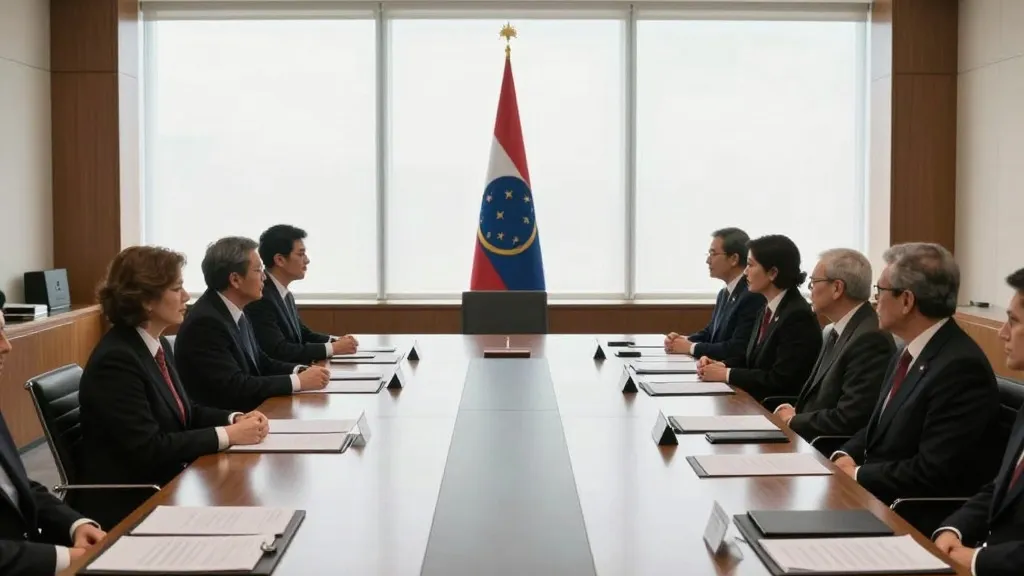
Prime Minister Mark Carney faced a delicate balancing act on Friday as he defended his government's stance on human rights while finalizing a major strategic partnership with Turkey. The move comes against a backdrop of intensified scrutiny following recent high-profile operations by Turkish authorities that critics say targeted opposition voices, independent media, and marginalized groups.
The core tension lies in Canada's desire to deepen trade ties with a partner that has long drawn criticism from human rights organizations. Carney addressed this directly, asserting that few nations on Earth can match the standards upheld by Canada. This defense was offered near the conclusion of his visit to the country, highlighting the ongoing diplomatic effort to reconcile trade objectives with value-based foreign policy.
A key point of contention is the specific nature of the engagement. Carney reiterated his previous description of Canada's approach as values-based realism, a framework that accepts not every international partner will share all Canadian values. He stated clearly that engagement in these partnerships does not imply approval of a partner's domestic policies. Instead, it reflects a pragmatic recognition that Canada holds a unique position in global standards.
Behind the scenes, diplomatic efforts to address these concerns were underway. A statement from the Prime Minister's Office confirmed that Foreign Affairs Minister Anita Anand raised human rights issues with her Turkish counterpart during meetings on Thursday. When journalists asked if Carney personally brought up these concerns with President Recep Erdogan during their separate meeting, the Prime Minister declined to give specific details. He emphasized that direct and open conversations are more effective than public reporting of every exchange.
The strategic context involves a broader shift in Canadian trade priorities. There is a concerted effort to reduce reliance on the United States market and diversify trading partners. While previous initiatives focused heavily on Europe and the Indo-Pacific region, the government has also engaged with states that have questionable human rights records, such as Saudi Arabia. The Turkey partnership is the latest step in this diversification strategy, aiming to secure new economic avenues for Canadian businesses.
Economic interests played a central role in the final days of the trip. After political discussions in Ankara, Carney held a series of meetings with business leaders in Istanbul. One significant area of focus is the potential sale of Canadian nuclear technology to Turkey as the country works toward its climate goals. Carney indicated there are good chances that the Canadian engineering firm AtkinsRealis will be selected as a partner to build two planned power plants in Turkey.
The visit also provided an opportunity for Carney to respond to diplomatic friction with Washington. On Thursday, the U.S. Embassy in Ottawa released a fact sheet formally accusing Canadian leaders of interfering in the upcoming U.S. midterm elections scheduled for November 3. Carney dismissed these allegations on Friday, stating that there is no merit to the claims and expressing disappointment that the U.S. envoy sees it as his role to make such suggestions. He noted that Canada maintains a deep diplomatic presence and frequent contact with American entities, but remains careful not to appear to interfere in the democratic process.
As the administration moves forward, the Turkey partnership serves as a test case for its foreign policy approach. The government continues to navigate the complex intersection of trade, values, and international relations. By maintaining direct lines of communication and focusing on economic diversification, Carney aims to solidify Canada's global standing while addressing domestic concerns about the government's engagement with foreign partners.
Source: CBC News
More Politics · World news · Report a business · Got a Story?