Chinese AI Shares Slump, Wiping $2.4 Trillion From Market Value
Beijing's state-backed investment fund began distributing funds this month as investors sold off technology positions.
By Christopher Richardson ·
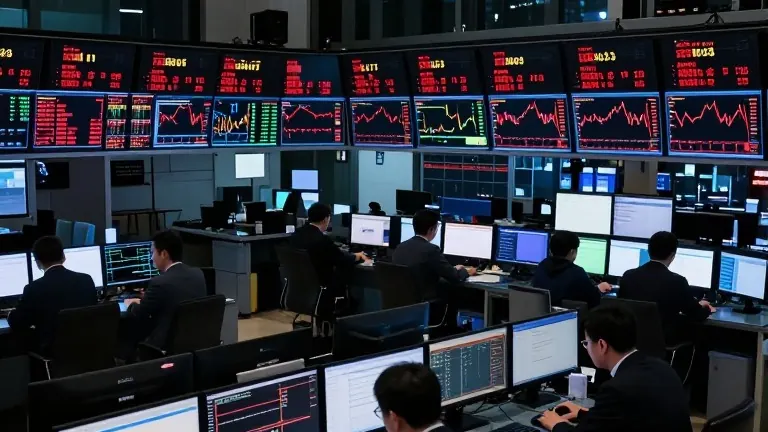
Chinese equity markets have shed trillions of dollars in value as investors reassess the profitability of the country's artificial intelligence sector.
The STAR 50 Index, which tracks technology and innovation firms listed in Shanghai, has fallen 40% since June. Other major company indexes declined by about 20% over the same period. Since May, the cumulative loss across China's stock market totals $2.4 trillion, according to Bloomberg. Artificial intelligence companies represent more than 40% of combined stock market value in China and Hong Kong, Goldman Sachs reported, linking the sector's performance to the wider market.
Dan Wang, the China director for the Eurasia Group, attributes the decline to thin profit margins, rising US interest rates, and weak domestic demand. "This year, the profit margin is not as good as expected. And the US is raising rates. And China's domestic demand is so weak," she said. Wang described a "general anxiety" among technology companies concerning whether state-backed investment can sustain returns in the face of soft consumer spending. Chinese households have remained reluctant to buy technology products, leaving many firms unable to turn a profit.
Beijing has committed substantial capital to the sector, including a 60bn yuan state-backed artificial intelligence investment fund that began financing domestic developers this month. Restrictions on overseas investment take further effect from 1 December as authorities encourage citizens to deploy capital within local markets, though these measures have not increased participation in Chinese stocks. Western policy adds pressure: the US has banned humanoid robots from China on national security grounds and is considering limits on Chinese components in data centres.
Robotics, which Beijing treats as essential to deploying artificial intelligence and addressing a shrinking workforce, has not delivered returns for investors. Unitree, China's leading robot manufacturer, has seen its share price halve since listing in August. Demand for these machines comes from government agencies and research institutions, while products remain too expensive and impractical for home use.
No major initial public offering is planned in China to match the scale of Anthropic's filing this Monday. The US company, which makes the chatbot Claude, could raise as much as $100bn. Chinese Communist party officials are meeting this week for the fifth plenum to prepare next year's 21st Party Congress, where Xi Jinping is expected to secure a fourth term. Wang said any stimulus measure would be "high risk": "What if it doesn't work out? Then whoever came up with that policy, that guy would be held accountable".
Source: The Guardian
More Business · Unethical Practices · Report a business · Got a Story?