Israelis Vote on War Strategy and National Identity
With high early turnout and a tight race, voters decide whether to keep Prime Minister Netanyahu or replace him with former military chief Gadi Eisenkot.
By Nadia Almasi ·
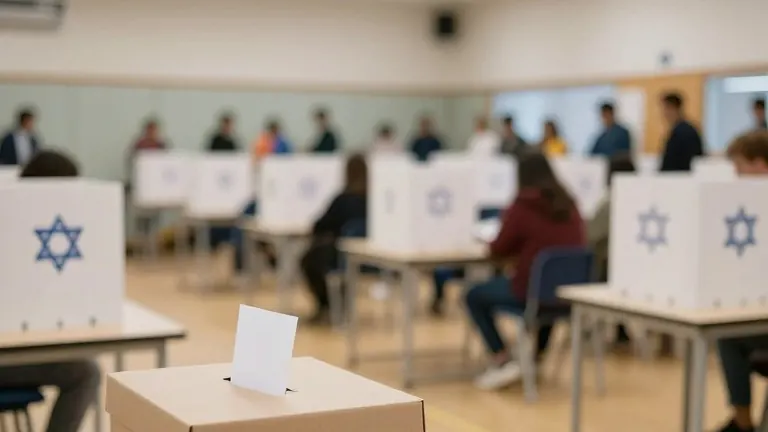
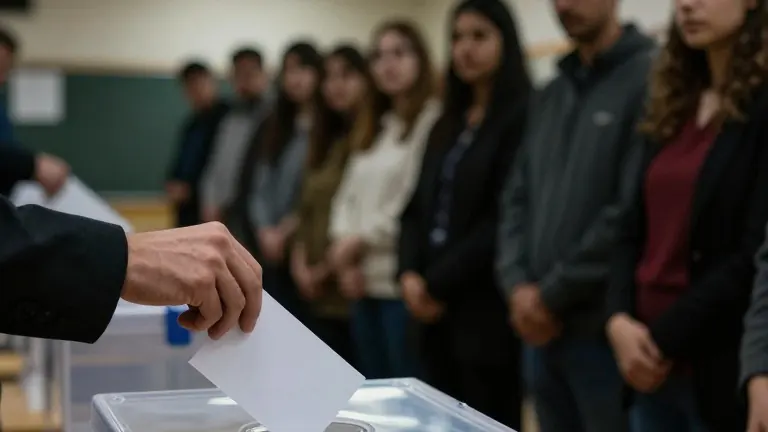
Israeli voters went to the polls on Tuesday to decide the country's political direction after three years of continuous war. The election pits Prime Minister Benjamin Netanyahu against Gadi Eisenkot, a former military chief. More than 7 million citizens are eligible to vote, and tens of thousands have returned from overseas to cast ballots. The outcome will determine whether the country remains under Netanyahu's leadership or shifts to a new coalition.
Early data from the Central Elections Committee showed that almost 17% of eligible voters had cast their ballots within the first three hours. This represents the highest early turnout recorded since 1981. In Israel's parliamentary system, no single party holds an outright majority. Leaders must form coalitions to govern. If neither Netanyahu's bloc nor the opposition group secures enough seats, weeks of negotiations may follow before a new government is established.
The race is defined by competing visions of national security and governance. Netanyahu's coalition includes religious and ultranationalist parties. His opponents argue he has prolonged the war in Gaza for political reasons and weakened the judiciary. Critics also point to his ongoing corruption trial and the exemption of ultra-Orthodox Jews from military service as key issues. Supporters view him as a steady hand who has guided the country through multiple conflicts while protecting its Jewish identity.
Eisenkot leads the opposition effort. His Yashar party campaigns on strong security credentials and a promise to restore the independence of the courts. Eisenkot has vowed to conscript ultra-Orthodox men into the military and improve Israel's international standing. He noted that his son and two nephews were killed in Gaza, a personal loss that resonates with many voters. His camp suggested a "systematic and deliberate" sabotage attempt after reporting nine incidents where ballot slips were missing or damaged, though the elections committee said overall irregularities were lower than in past votes.
Arab-led parties hold the potential to be kingmakers. Mansour Abbas, head of the Islamist Ra'am party, stated that "our vote will change the government" while casting his ballot. He hoped turnout in Arab communities would exceed 70%. Itamar Ben-Gvir, the far-right national security minister, warned that if Netanyahu's allies did not win, it would become "Mansour Abbas' government." This dynamic adds a layer of complexity to coalition building.
Tensions with Iran hang over the campaign. Netanyahu recently appeared in a video beside a missile-defense battery, warning Tehran of a "devastating blow" if it attacked Israel. The election is the first national vote since the October 7, 2023, attack that triggered the war in Gaza. In Tel Aviv, families of the dead and former hostages held a moment of silence before polls opened. Yona Adam, whose daughter Mapal was killed, urged voters to remember those whose voices are no more.
Approximately 330,000 young Israelis are voting for the first time. Many face compulsory military service under the shadow of ongoing conflict. Eisenkot visited communities attacked on October 7 early Tuesday. He said that a responsible government would start the morning in those areas, while Netanyahu had not yet been seen in public three hours after polls opened. In Kiryat Shmona, a Netanyahu stronghold near the Lebanese border, one man tore down a poster of Eisenkot, reflecting the high emotions among some voters.
The election also addresses the country's international standing. Since 2023, Israel has faced growing criticism from traditional allies in the United States and Europe. Public support has declined, and some partners have imposed sanctions over conduct in Gaza and settler violence in the West Bank. Parties backing Eisenkot have pledged to address these diplomatic challenges. Nisso Shitrit, a voter in Jaffa, described the vote as deciding who serves and who evades service in building the country.
Polls will close later Tuesday, and preliminary results are expected to show the balance of power in the Knesset. The acting director-general of the elections committee, Dean Livne, noted that reports of issues at polling stations were lower than in previous elections. The outcome will set the stage for coalition talks that could last for weeks, determining who leads Israel in the next phase of the regional conflict.
Source: KNSD