Israel Votes in Tightest Race in Decades
Turnout reached its highest level for the first three hours since 1981 as voters choose between Netanyahu and Eisenkot.
By Chioma Kim ·
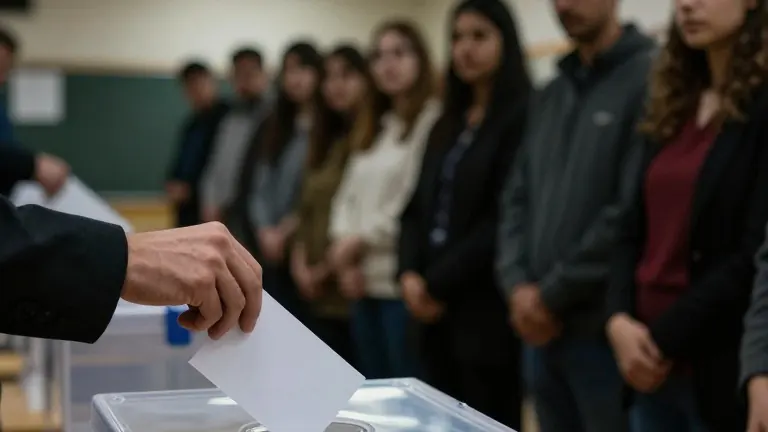
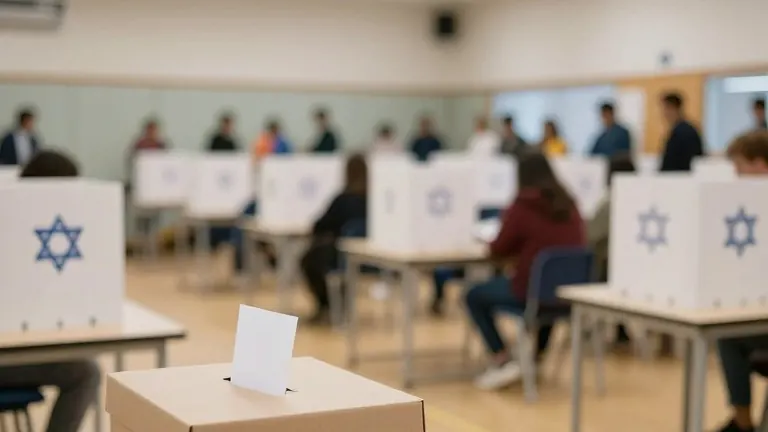
Israelis cast ballots on Tuesday in a contest defined by three years of unresolved conflict and a deep divide over the nation's direction. Prime Minister Benjamin Netanyahu faces a coalition of parties seeking to end his tenure as the country's longest-serving leader. The election serves as a direct referendum on his management of the war in Gaza and the hostage crisis, with over 7 million citizens eligible to vote.
Initial data from the Central Elections Committee indicates that nearly 17% of eligible voters participated in the first three hours. This figure marks the highest turnout for that time window since 1981. Tens of thousands of Israelis living abroad traveled home to cast their votes, adding to the high engagement levels observed across the country.
Former military chief Gadi Eisenkot is the primary challenger to Netanyahu. Opinion polls suggest the race is tight, with both leaders competing for the support of a fragmented electorate. Eisenkot visited communities in the south that were targeted during the October 7, 2023 attack. He argued that a responsible government would begin its day in those areas, a statement that contrasted with Netanyahu’s absence from public view during the early voting hours.
The election is also a test for Israel’s Arab-led parties, who have pushed for high turnout to position themselves as kingmakers. Mansour Abbas, head of the Ra’am party, stated that his vote would change the government and hoped Arab community participation would exceed 70%. In response, far-right minister Itamar Ben-Gvir warned that if Netanyahu’s side failed to secure a majority, the resulting government would effectively belong to Abbas.
Political instability looms if no single bloc can form a majority, potentially leading to weeks of coalition negotiations. The Yashar party, led by Eisenkot, filed an urgent complaint regarding nine instances where ballot slips were missing or damaged. Despite these reports, the acting director-general of the elections committee, Dean Livne, said the volume of irregularity complaints was lower than in previous cycles.
The vote determines whether Israel continues under a religious and ultranationalist coalition or shifts toward a bloc that promises to conscript ultra-Orthodox men and bolster the judiciary. In Tel Aviv, families of victims from October 7 observed a moment of silence. Yona Adam, whose daughter was killed in the attack, urged voters to remember those whose voices are no more. Around 330,000 young Israelis, many facing mandatory service, are voting for the first time in this pivotal decision.
Source: KNBC