Razer Basilisk V4 Pro Trades Thumb Ergonomics for 200-Hour Battery
The new mouse adds an AI key and extends runtime, but the redesigned button cluster draws criticism from senior editors.
By Chioma Kim ·
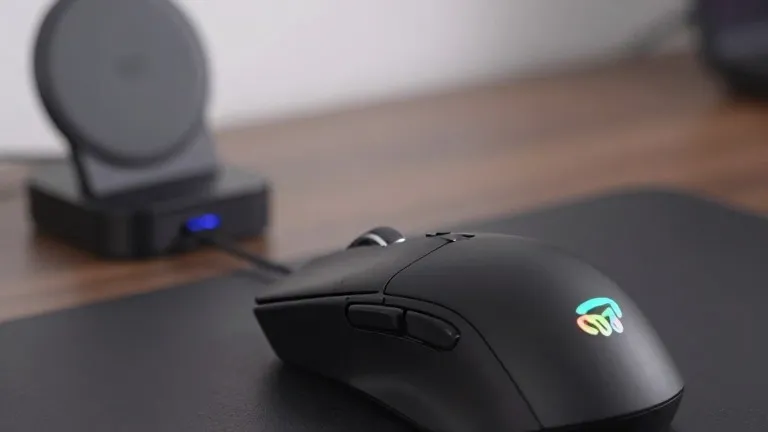
Gaming mouse users will spend fewer hours swapping batteries this fall, but some may find their thumb buttons harder to reach. Razer released the Basilisk V4 Pro on October 23, 2026, marking the first major refresh to the line since October 2024. The device ships at a price of $169.99 in black and white, with a separate charging dock available for $69.99.
Battery life increased from 150 hours on the previous model to 200 hours at a 1,000 Hz polling rate over 2.4GHz wireless. At the maximum 8,000 Hz setting, the runtime drops to 54 hours. The mouse weighs 3.53 ounces, a reduction of 12 grams compared to the 3.95 ounce Basilisk V3 Pro 35K. Sarah Jacobsson Purewal, senior editor at Tom's Hardware, noted the device is easier to pick up, though it remains heavier than ultralight competitors.
Razer added two new inputs, bringing the total count to 12 programmable buttons. A third thumb button now sits in front of the standard pair and defaults to opening an AI prompt. A second new button, located beside the left click, switches profiles. Jacobsson Purewal found the profile button positioned too far forward on the 127.5mm long body for comfortable use with medium-sized hands. She described the thumb cluster as slightly off due to the new AI key's placement.
The hardware specifications include the Focus Pro 50K optical sensor, which reaches 50,000 DPI and 930 IPS. It tracks on surfaces including glass at least 4mm thick. The fourth-generation switches are rated for 100 million clicks and showed no misclicks in testing. The tilt wheel offers 24 or 48 tactile steps or a free-spin mode, a feature the reviewer found prone to backscrolling.
The V4 Pro connects via USB-C, 2.4GHz, or Bluetooth. It sits between the DeathAdder V4 Pro and the Naga V3 Pro in Razer's lineup. The box includes a USB-A dongle, an adapter, and a 6-foot braided cable. The reviewer identified the weight reduction and battery life as primary strengths, while citing the price and the altered thumb button layout as main drawbacks.
Source: Tom's Hardware