Riyadh Season Proceeds Despite Missile Strikes
The 10-week entertainment festival opened this weekend with 27,000 attendees at Boulevard City, even as Houthi attacks continue to disrupt travel and oil infrastructure.
By Christopher Richardson ·
Riyadh Season, a 10-week entertainment and sporting festival, opened this past weekend in the Saudi capital. The event launched despite a series of missile strikes that hit Riyadh’s airport earlier this month. Those attacks killed more than 12 people, closed parts of the national airspace, and forced the cancellation of several high-profile gatherings. The decision to proceed reflects the kingdom's effort to maintain its cultural and economic calendar while managing a renewed conflict with Yemen’s Houthi rebels.
For years, the Houthi war remained in the background for most Saudis. That changed recently when a truce collapsed. The rebels began launching drones, ballistic missiles, and cruise missiles across the country. Almost every night in Riyadh now features the sound of interceptors launching to destroy incoming projectiles. The conflict has shifted from a distant campaign to a present threat on home soil.
The strikes have forced major adjustments in the capital. In October alone, Houthi attacks on airports killed at least 21 people and wounded hundreds. Authorities shut down operations at the main international airport in Riyadh, though officials announced on Sunday that some flights had resumed. Schools switched to online-only learning. Saudi Aramco, the state-owned oil company, ordered staff to work remotely. The U.S. Embassy directed non-emergency government employees and their families to leave the country.
The timing of the strikes has disrupted the kingdom’s international-facing agenda. The World Petroleum Congress went ahead with many executives attending virtually. However, the European Union and Persian Gulf summit and the Future Investment Initiative conference were postponed until next year. Some of Riyadh Season’s major sporting events, including the Six Kings Slam tennis tournament, were also delayed. Box, UFC, and WWE events remain on the schedule.
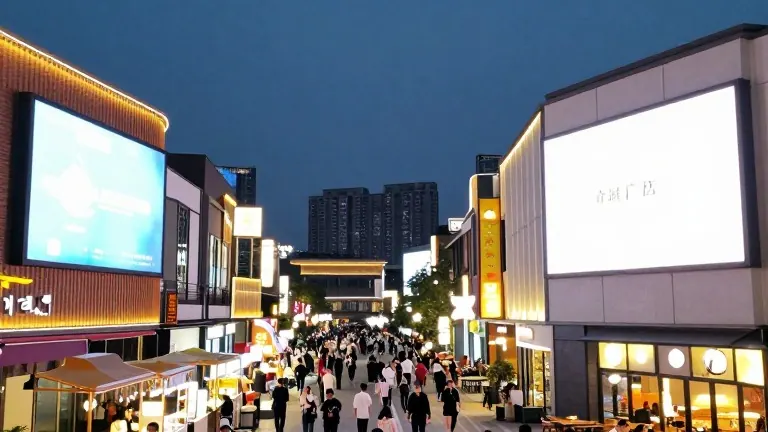
At Boulevard City, a car-free district that combines an open-air mall with entertainment venues, the opener drew large crowds. By dusk, families filled a replica of Times Square. Patrons attended a sold-out comedy play in one of two theaters. A 7,000-seat arena hosted the debut of a Lebanese pop star’s comeback tour, which also sold out. Hassan Albar, the director of Boulevard City, reported that approximately 27,000 people visited the site during the opening days.
Albar noted a sense of relief among organizers. "And we’re still at the beginning of the season," he said. Visitors described a determined attitude to continue normal routines. Neetika Malotra, 33, said, "We like to keep it positive, so we’re not going to be staying inside." Her companion, Ankid Abishaikh, 34, added that the situation feels normal to those living there, despite how it is portrayed in media.
The economic impact is becoming more visible. The U.S.-Israel war on Iran and the Houthi campaign have harmed oil production. The closure of the Strait of Hormuz denies the kingdom its main export corridor. Over the weekend, Houthis targeted crude oil pumping stations, an oil refinery, an Aramco facility in Yanbu, and the East-West Pipeline. The Saudi military faces challenges in defending the country, which is more than five times the size of California, due to a fast-depleting supply of interceptors.
Contractors working on major state projects reported that staff have been reassigned or let go. Ancillary businesses, including catering and events organizers, have suffered revenue losses of up to two-thirds. Despite these financial pressures, many residents believe the war has not drastically altered their daily safety. Abdul Rahman Al-Hassan, 38, a dentist in Riyadh, compared the situation to Moscow, where residents continue their lives despite drone attacks.
A sense of collective trust in the government has emerged. Awatef Mohammad, a 31-year-old English teacher, said, "We fully trust the government and the leadership in charge." At King Abdulaziz Racecourse, which is less than three miles from the airport, spectators watched horse racing on the weekend. Jamil Mohammad, a 42-year-old occupational therapist, brought his children to the track. "Death only comes once. I’m not going to let it stop me living my life," he said.
The government has adjusted its public messaging to reflect the current security environment. Billboards now feature images of F-15 fighter jets and slogans such as "Our bravery brings us together." This shift replaces previous promotional materials focused on Vision 2030 and economic development. The next phase of Riyadh Season will include continued performances and sporting events, with organizers monitoring flight schedules and security alerts as the 10-week run progresses.
Source: Los Angeles Times
More Business · Unethical Practices · Report a business · Got a Story?