US Pump Prices May Spike as Iran Bars Navy from Gulf and Oil Tops $117
Iranian military leaders claim US warships are targets, while Brent crude hits its highest level since April amid continued tanker attacks.
By Chioma Kim ·
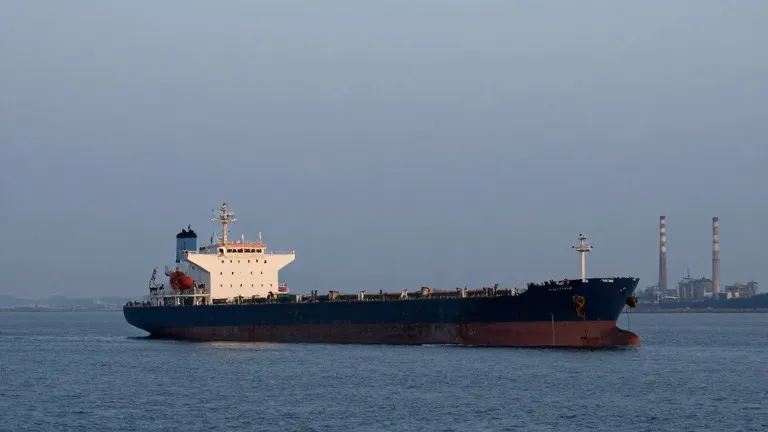
Gas prices and insurance costs for goods moving through the Middle East are rising as Iran declares that United States warships are no longer welcome in the Persian Gulf. The announcement comes as Brent crude oil reaches approximately $117 per barrel, its highest point since April.
Iran’s chief of general staff, Ali Abdollahi, stated on Saturday that the US Navy cannot re-enter Iranian territorial waters or the surrounding areas. He argued that Tehran can target any vessel in the region. Abdollahi said, "The US president can only dream of their soldiers and military again entering the Persian Gulf."
This declaration follows President Donald Trump’s comments at a rally in Florida on Friday. Trump suggested the US military "may do another Epic Fury," referring to the large bombing campaign launched against Iran at the start of the war. He indicated that Washington has not yet decided between ending the fighting with massive strikes or maintaining the naval blockade and sanctions.
Shipping remains vulnerable in the Strait of Hormuz. The Islamic Revolutionary Guard Corps reported that seven tankers were attacked or hit mines overnight into Thursday. On Friday, the group claimed two supertankers struck mines. These attacks have unsettled the entire region and pushed energy costs higher.
President Trump faces a decision on whether to escalate or maintain pressure. His earlier remarks highlighted a choice between a quick end via strikes or a prolonged squeeze through economic and naval measures. The US has reportedly ordered many diplomatic staff to leave Saudi Arabia, with more departures expected from other regional countries.
Diplomatic efforts have stalled. Senior diplomats from Turkiye, Saudi Arabia, Pakistan, and Egypt met with counterparts from the UK, France, Germany, and Italy in Istanbul on Friday. Neither the US nor Iran attended. Turkiye’s Foreign Minister Hakan Fidan warned that a new attack would widen the war. He added that "no one is endorsing it at this point." The regional ministers demanded unrestricted passage through Hormuz.
Iranian state media claim Tehran has activated a "dead hand" doctrine. This strategy would allow attacks on US, Israeli, and regional interests to continue from all 31 provinces if senior leaders are killed again. Analyst Reza Nasri wrote that Iran "will no longer negotiate under bombardment." Brent crude prices reflect the ongoing uncertainty, staying near record highs as the conflict enters its ninth month.
Source: Al Jazeera
More Business · World news · Unethical Practices · Report a business · Got a Story?