Tesla Reverses Course, Building Proprietary Maps to Bolster FSD Capabilities
The automaker is developing its own mapping system to address persistent issues with speed limits, parking, and routing.
By Chioma Kim ·
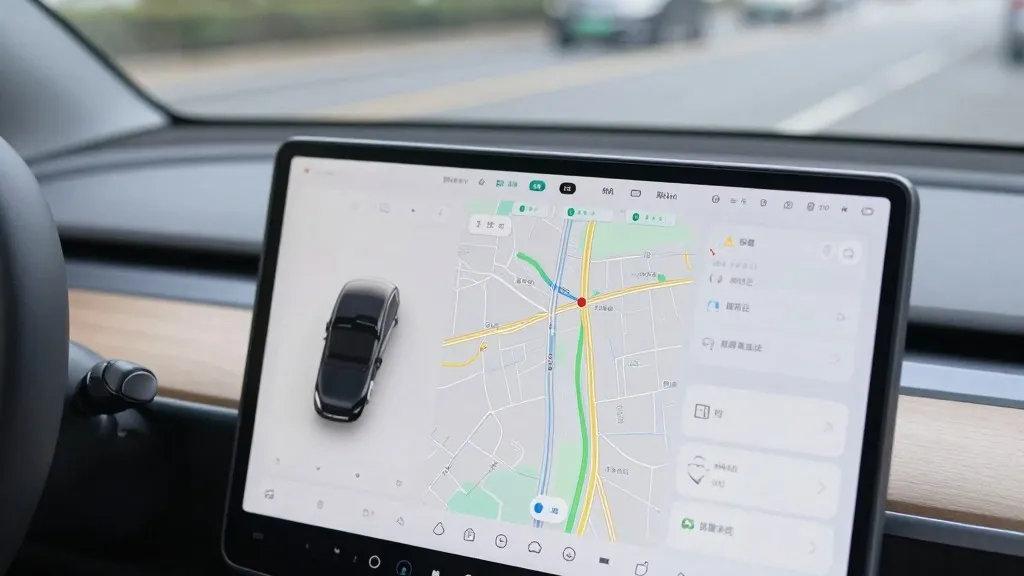
Tesla is developing its own mapping technology to address persistent shortcomings in its Full Self-Driving system.
The company’s Vice President of AI, Ashok Elluswamy, confirmed the initiative during the third-quarter 2026 earnings call, stating, “we shouldn’t be depending on external people’s maps.” He explained that Tesla is constructing a proprietary map layer utilizing a new AI-based architecture. This system will aggregate data collectively learned by the fleet while also incorporating individual driver preferences and responding to voice commands.
This development marks a significant pivot for the automaker, whose CEO, Elon Musk, has previously dismissed high-definition maps as a liability. During a 2019 presentation, Musk characterized the use of such maps as “a huge mistake” and a “really bad idea,” arguing they render autonomous systems “extremely brittle.” At that time, Tesla advocated for a vision-only approach, contrasting it with competitors who rely on detailed mapping and sensors.
Tesla’s history regarding mapping is complex. In 2015, the company announced it was creating high-precision maps for Autopilot with granular detail. However, the stance shifted in subsequent years as the company pivoted toward a pure vision strategy. Now, seven years after labeling detailed maps a bad idea, Tesla is constructing a map layer to assist its vehicles in navigating specific environmental challenges.
The company’s AI leadership indicated that the new system will initially handle the start and end of trips with FSD version 15. Over subsequent months, the technology is slated to expand its scope to manage navigation, parking, and destination handling.
The push for proprietary mapping follows recent scrutiny regarding the system’s ability to process environmental data. Last month, a Belgian road safety group reported that FSD exceeded speed limits in 55 percent of tested 30 km/h zones in Brussels, with the vehicle’s screen frequently displaying an incorrect 50 km/h limit. Additionally, the National Highway Traffic Safety Administration is considering an investigation into reports that Tesla Robotaxis travel too fast through active school zones.
By building its own map from fleet data, Tesla’s operational strategy begins to mirror that of competitors like Waymo. Waymo utilizes sensor-equipped vehicles to map cities prior to launching service and updates those maps continuously. Tesla is now describing a similar process where its fleet collects data to feed a shared map that aids all vehicles in driving more effectively. The primary distinction remains the hardware; Waymo vehicles utilize lidar, whereas Tesla relies on cameras.
Tesla’s current Robotaxi service operates within geofenced areas on a city-by-city basis, a model that necessitates detailed environmental awareness. While the company is not currently producing centimeter-level high-definition maps, the creation of a fleet-built map that grows in detail could lead to that outcome.
The transition to a map-based architecture contradicts previous statements regarding unsupervised autonomy. Musk has previously indicated that unsupervised FSD for consumer vehicles is scheduled for the second quarter of 2027, restricted to the Robotaxi fleet. The development of a proprietary map layer suggests the company is addressing limitations in its vision system to ensure the system can operate reliably.
Source: Electrek · original report published