Israel Votes Tuesday on Court Control
Leading contenders agree on Gaza strategy but clash over judicial powers and Haredi conscription rules.
By Chioma Kim ·
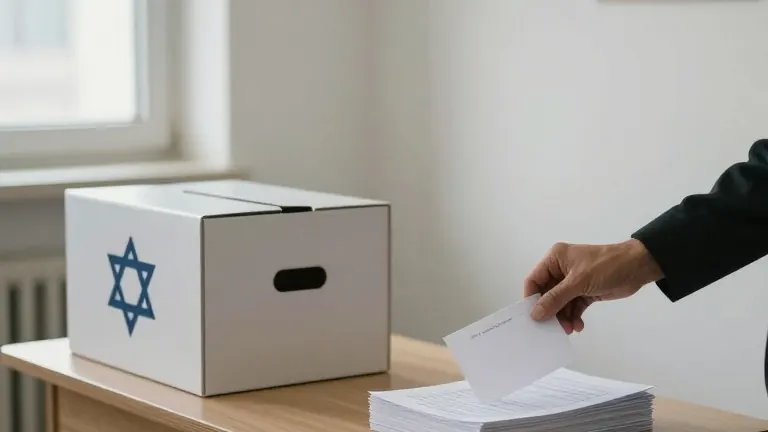
Israeli voters head to the polls on Tuesday to decide the direction of the country. The election is framed by domestic disputes rather than disagreements over the war in Gaza. Most major candidates support the military campaign that began after the October 7, 2023, attacks. The real split lies in how the government should be run at home.
Prime Minister Benjamin Netanyahu leads the hard-right bloc. His government has moved to limit the power of the Supreme Court. In 2022, the coalition proposed a plan to curb judicial authority. This triggered months of protests before the Gaza war paused them. The government has passed laws changing how judges are appointed. A July law reduced the powers of Attorney General Gali Baharav-Miara. Both measures take effect after the election. The opposition vows to reverse them.
The conscription of ultra-Orthodox Jews is another major issue. The Haredi population is growing, and many young men avoid military service. Netanyahu relies on two Haredi parties, Shas and United Torah Judaism, for support. These parties want a law to overturn a 2024 Supreme Court ruling. That ruling required more Haredi students to serve. About 40 Haredim were arrested this month for avoiding the draft. Netanyahu called the arrests an attempt to harm the process. Shas leader Aryeh Deri said his party will not join a government unless yeshiva student status is regulated.
Opponents propose a different approach. Gadi Eisenkot of the Yashar party calls for a government of conscription. He describes the current administration as a draft-dodging government. Avigdor Liberman of Yisrael Beiteinu calls Netanyahu a hostage to draft evaders. The opposition coalition promises to manage policy within the law. They aim to remove the more extreme elements of the current government.
The two-state solution remains a point of contention, though fewer candidates have clear plans. Israel agreed to work toward a two-state settlement in the 1990s Oslo Accords. Netanyahu has said there will be no Palestinian state. Finance Minister Bezalel Smotrich wants the next government to cancel the Oslo Accords. He also urges migration from Gaza and the West Bank. Yair Golan of the Democrats party says a leap to two states is impossible while Israeli society is in trauma.
Accountability for the October 7 attacks has dominated the campaign. More than 74,000 people have been killed in Gaza. The two main alliances have not included this figure in their platforms. Security failures led to the resignation of Chief of Staff Herzi Halevi in January 2025. Shin Bet head Ronen Bar left in June of last year after a dispute. No similar inquiry has examined Netanyahu’s role. Reports suggest the UAE and Egypt warned him before the attack.
Eisenkot promised a State Commission of Inquiry into the failures. He said Netanyahu was warned and did not act. Netanyahu told the Knesset his government wants an inquiry with broad public support. The proposed government-led inquiry has been deferred to the next session of the Knesset.
Source: Al Jazeera
More Politics · World news · Report a business · Got a Story?