Taiz families cook on firewood
A month-long siege of Yemen's third-largest city has closed all land routes, doubling food prices and halving water production.
By Chioma Kim ·
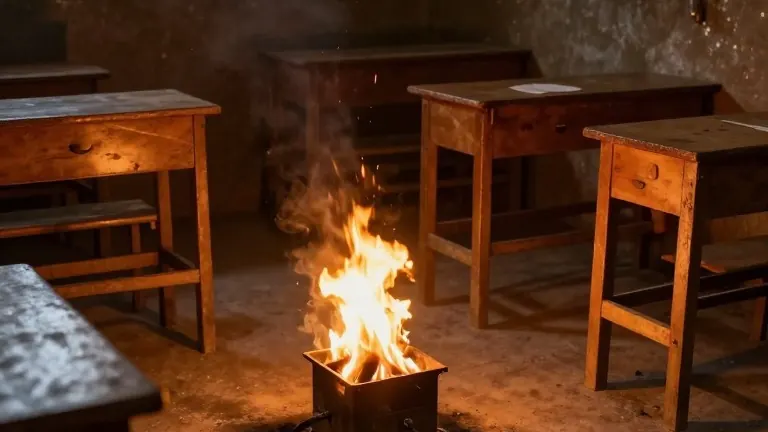
Yousef Farhan, a 39-year-old father of four, now cooks his family's meals over firewood. He lost his income when the siege of Taiz closed the school where he had sold cucumbers from a small cart. His family has lived in that school in the Wadi al-Qadi zone for years, displaced by shelling. Farhan previously earned between 4,000 and 5,000 Yemeni riyals daily, enough to buy a monthly gas cylinder. That income stopped when the school suspended operations.
Taiz, home to approximately one million people, has been cut off from land routes since early October. The Houthi forces captured al-Turbah on October 4, severing the main road to Aden. On October 3, government loyalist forces closed the eastern al-Houban crossing. The United Nations warned on October 20 that these closures blocked vital supplies. Consequently, the price of available food and fuel more than doubled, while water production dropped by half.
Sayyun Burhan, 40, describes her family's existence as living day by day. Her husband lost his job at a local store, and his failing health prevents him from finding alternative work. The family still requires funds for rent, food, water, and cooking gas. UN officials report that the cost of water delivered by tankers has roughly tripled since the fighting began. Burhan keeps her children indoors to protect them, resulting in missed lessons and reduced playtime.
Fuel shortages have created a cascading effect on civilian services. Diesel powers water pumps, hospital generators, and ambulances. Petrol allows residents to travel to work and medical appointments. Cooking gas enables food preparation. Fuel stations in the city have remained closed since October 5. Al Jazeera data shows a 20-liter container of petrol now costs 120,000 riyals, four times the price from last year. Diesel has nearly doubled to 90,000 riyals for the same volume. A cooking gas cylinder costs 40,000 riyals, up from 11,400 riyals.
Bus fares have increased by 150 percent, rising from 200 riyals to 500 riyals per ride. This increase places a heavier burden on household budgets already strained by food costs. Farhan’s shift to firewood illustrates this loss of spending power. He once managed with a gas cylinder each month. Now, even basic meals depend on available fuel. Local authorities state that access restrictions are also preventing tankers from the Al-Dhabab basin from entering the city, worsening the water shortage.
Fatima Khaled, 55, sleeps on the floor of the dialysis hall at Al-Jumhuri General Hospital. She suffers from kidney failure and cannot afford repeated trips from her village west of the city for treatment. Closed roads and long mountain detours have made every journey exhausting and expensive. The hospital is under strain. On October 22, the World Health Organization reported that 42 health facilities in Taiz faced severe shortages of fuel, oxygen, medicine, and medical supplies.
Khaled describes her situation as imprisonment. The hospital hall serves as her only shelter. She lacks housing or alternative accommodation. The closure of roads and the rising cost of fuel continue to limit mobility and access to essential services across the city.
Source: Al Jazeera