Ukraine Blames SpaceX Throttling for Deadly Drone Gaps
A sudden restriction on high-speed Starshield access disrupted Ukrainian air defenses, sparking debate over the concentration of orbital power in one private firm.
By Nadia Almasi ·
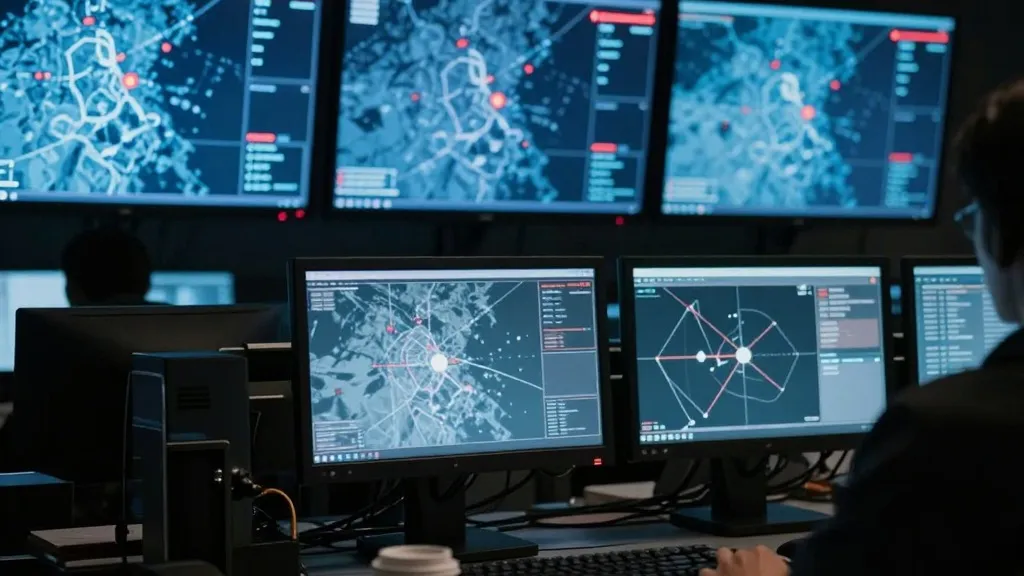
Ukrainian forces found their air defense systems failing at the worst possible moment last week when a critical military satellite service was deliberately slowed down. The interruption left interceptors unable to track fast-moving Russian drones, creating a window of vulnerability that allowed strikes on energy infrastructure. At least two people were killed and 17 others injured in the resulting attacks. This operational failure has ignited a fierce debate about the dangers of relying on a single private company for national security.
The disruption affected Starshield, the military branch of SpaceX’s Starlink network. The service was throttled to prevent terminals moving above specific speeds from connecting. Ukrainian commanders reported they received no prior warning before the change took effect. President Volodymyr Zelenskyy characterized the move as a direct signal from Washington, reflecting the growing friction between Kyiv and the White House. The incident drew sharp public criticism, with many accusing the United States of abandoning its ally and the space industry leader of empowering that shift.
Accounts of who authorized the change have shifted rapidly in the days since the incident. Initially, the chief executive of SpaceX stated that the decision lay with the US military, not his company. The White House also denied taking any direct action. Subsequent reports suggested the CEO proposed the restriction to the President, who approved it. Later accounts indicated the CEO ordered the limits himself. Access to the service has since been restored for Ukrainian users.
This episode highlights Ukraine’s heavy dependence on American technology for its defense. Such limitations are not new. In 2022, coverage was restricted during a counteroffensive in Crimea. Analysts argue this case reveals the immense geopolitical leverage now held by a single unelected individual. This concentration of power is a direct result of the space industry’s consolidation into one dominant player.
Wendy Whitman Cobb, a professor at Maxwell Air Force Base, notes that SpaceX holds a de facto monopoly on rocket launches. While competitors like United Launch Alliance, Blue Origin, and Rocket Lab exist, none match SpaceX in frequency, payload capacity, or cost efficiency. Oğuz Karasu, a space economist at Oxford, describes this dominance as practical rather than legal. He explains that while launch represents only a small fraction of the industry’s total value, the entire sector depends on it to function.
SpaceX has deployed over 10,000 satellites in low Earth orbit using its Falcon 9 rockets. Andrew Reddie of the University of California, Berkeley, calls the situation an antitrust concern because SpaceX launches rockets that support its own constellations, reducing its incentive to help rivals. Although the company has launched some satellites for Amazon’s Kuiper project, experts report that prices for Falcon 9 launches and Starlink services have risen significantly since the early 2020s.
The stakes extend beyond military applications to daily life. Whitman Cobb warns that a GPS outage could disrupt fuel pumps, automatic teller machines, financial systems, and emergency services. Karasu argues that concentrating so much control in one person is detrimental to society’s long-term future. Even government agencies face exposure. SpaceX is reportedly phasing out the Falcon 9 for new missions starting in 2028, leaving the Space Force and NASA seeking alternative options for crewed flights and military payloads.
Reddie identifies the core security issue as a non-state actor making decisions with the authority of a government. Scataglini of the Oxford Space Initiative calls it a global wake-up call, warning that one firm could determine which nations retain access to space. Whitman Cobb remains cautiously optimistic that this crisis will raise awareness about the risks of single-company reliance, though she notes it took human lives for the problem to become visible.
Source: The Verge