UN Vote: Cuba Embargo Support Falls as Allies Break From Tradition
The resolution condemning the U.S. trade ban drew 130 votes, a sharp decline from last year as several Western nations abstained for the first time.
By Christopher Richardson ·
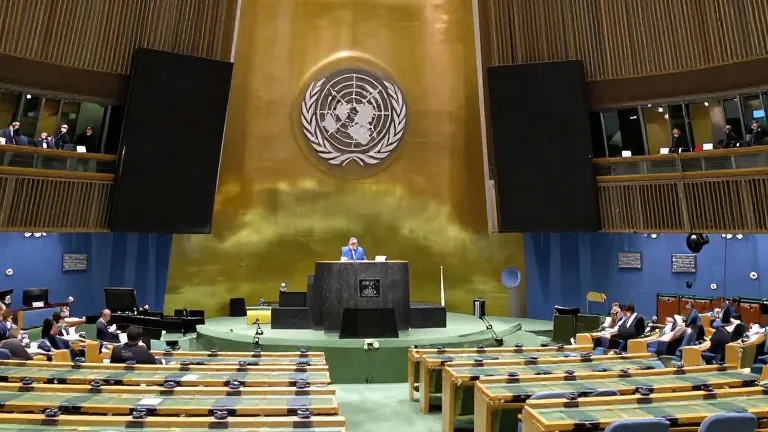
The United Nations General Assembly voted Wednesday to condemn the U.S. economic embargo of Cuba for the 34th consecutive year, yet the support for the measure fractured along new lines. The final tally stood at 130 votes in favor, 17 against, and 25 abstentions. This result marked a distinct drop in international consensus compared to the previous cycle, when more than 160 nations backed the resolution and only 12 chose to abstain.
Washington’s diplomatic push altered the voting patterns of long-time supporters. For the first time in the 34-year history of this annual vote, Western nations including Germany, Italy, and Latvia refrained from casting a ballot. A group of countries that had historically voted with Cuba also shifted their position. Bosnia, Colombia, Costa Rica, Ecuador, Lithuania, Morocco, North Macedonia, Paraguay, and Slovenia all voted against the measure, with most doing so for the first time.
These resolutions are not legally binding, but they serve as a barometer of global opinion. The shift occurred while the Trump administration intensified its economic pressure on Havana. President Donald Trump recently suggested that U.S. warships could stop in Cuba on their return from the Iran war, raising the prospect of military involvement. The administration is using increased economic sanctions to force political changes on the island.
Cuban Foreign Minister Bruno Rodríguez defended the island ahead of the vote. He stated, “A great power is attacking through economic war a member state of this organization. Cuba is not a threat. The blockade is a threat.” His remarks framed the conflict as an economic assault rather than a military one.
U.S. Ambassador to the U.N. Mike Waltz offered a counter-narrative to the assembly. He told member nations that their vote today was the only barrier preventing a “corrupt, kleptocratic communist regime” from claiming another propaganda victory. Waltz argued that the resolution served the Cuban government more than the Cuban people.
Tensions between the two delegations spilled over into physical confrontations during the session. On Tuesday, Waltz and Rodríguez engaged in a shouting match on the assembly floor. Rodríguez walked to the podium while Waltz was speaking and called the U.S. envoy a liar. Waltz responded by telling Rodríguez to back away from the podium, saying he would not be intimidated in the United States.
The diplomatic friction has become a regular feature of recent sessions. A similar incident occurred a week earlier outside a U.S.-hosted panel featuring Cuban dissidents. The exchange highlighted a break from traditional diplomatic decorum at the U.N. as the two nations engage in a more contentious phase of their rivalry.
The U.S. embargo was originally imposed in 1960 following the revolution that toppled Fulgencio Batista. Recent tariff threats from the White House in late January have cut off fuel supplies to the island. These shortages have led to widespread power outages that disrupt water, internet, and telephone services across Cuba.
Source: The San Bernardino Sun